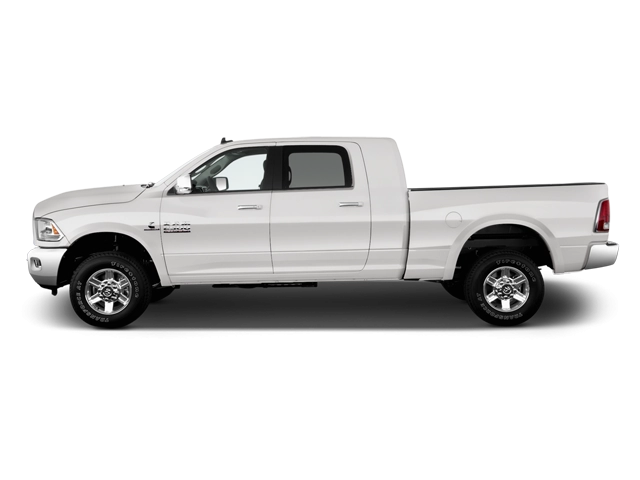
2027 RAM 2500 3500 Owner's Manual
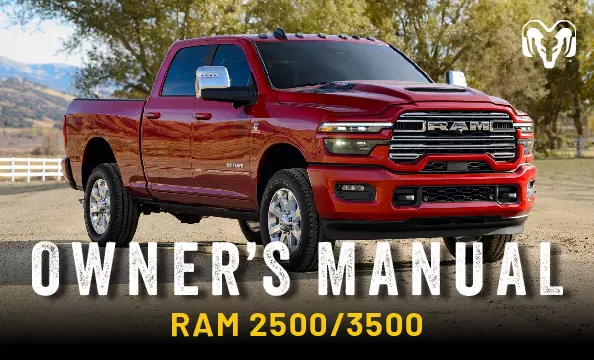
2027 RAM 2500 3500 owners manual
Year:
2027
Make:
RAM
Model:
2500 3500

Online manual

Size:
13.39 MB

Table of Contents

CONTENTS
3
INTRODUCTION
11
WELCOME
11
SYMBOLS KEY — DANGER, WARNINGS AND CAUTIONS
12
VEHICLE MODIFICATIONS ALTERATIONS
12
Van Conversions/Campers
12
Consumer Information — Truck-Camper Loading
12
SYMBOL GLOSSARY
14
GETTING TO KNOW YOUR VEHICLE
19
KEYS
19
Key Fob
19
To Lock/Unlock The Doors And Tailgate
19
Using The Panic Feature
19
Key Left Vehicle Feature
20
Replacing The Battery In The Key Fob
20
Programming And Requesting Additional Key Fobs
21
Auto Key Off
21
Sentry Key
21
REMOTE START — IF EQUIPPED
22
Description
22
How To Use Remote Start
22
To Exit Remote Start Mode
23
Remote Start Front Defrost Activation — If Equipped
23
Remote Start Comfort Systems — If Equipped
23
Remote Start Windshield Wiper De-Icer Activation — If Equipped
24
Remote Start Abort Message
24
REMOTE START — IF EQUIPPED (DIESEL)
24
How To Use Remote Start
24
VEHICLE SECURITY SYSTEM — IF EQUIPPED
24
Description
24
To Arm The System
25
To Disarm The System
25
Rearming Of The System
25
Security System Manual Override
25
DOORS
25
Manual Door Locks
25
Power Door Locks — If Equipped
26
Power Side Steps — If Equipped
26
Keyless Enter ‘n Go™ — Passive Entry (If Equipped)
27
Automatic Unlock Doors On Exit — If Equipped
28
Automatic Door Locks — If Equipped
28
Child-Protection Door Lock
28
WINDOWS
29
Power Windows
29
Automatic Window Features
29
Reset Auto-Up — If Equipped
30
Window Lockout Switch
30
Power Sliding Rear Window — If Equipped
30
Manual Sliding Rear Window — If Equipped
30
Wind Buffeting
30
MIRRORS
31
Inside Rearview Mirror
31
Manual Mirror — If Equipped
31
Automatic Dimming Mirror — If Equipped
31
Digital Rearview Mirror — If Equipped
31
Illuminated Vanity Mirror — If Equipped
33
Slide-On-Rod Feature Of Sun Visor — If Equipped
33
Outside Mirrors
33
Trailer Tow Telescoping Mirrors
34
Outside Mirrors Folding Feature
34
Outside Mirrors With Turn Signal And Approach Lighting — If Equipped
35
Outside Automatic Dimming Mirror — If Equipped
35
Power Mirrors — If Equipped
35
Power Folding Outside Mirrors — If Equipped
35
Automatic Power Folding Mirrors — If Equipped
36
Tilt Side Mirrors In Reverse — If Equipped
36
Power Convex Mirror Switch — If Equipped
36
Forward Utility Lights and Rear Guidance Lights — If Equipped
37
Heated Mirrors — If Equipped
38
USER MEMORY SETTINGS — IF EQUIPPED
38
Description
38
Programming The Memory Feature
38
Linking And Unlinking The Remote Keyless Entry Key Fob To Memory
38
Memory Position Recall
39
HEAD RESTRAINTS
39
Description
39
Front Head Restraints
39
Front Head Restraint Removal
40
Rear Head Restraint Adjustment
40
Rear Head Restraint Removal
40
FRONT SEATS
41
Manual Adjustment Front Seats — If Equipped
41
Manual Front Seat Forward/Rearward Adjustment
41
Manual Front Seat Recline Adjustment
41
40-20-40 Front Bench Seat — If Equipped
41
Power Adjustment Front Seats — If Equipped
41
Adjusting The Seat Forward Or Rearward
42
Adjusting The Seat Up Or Down
42
Tilting The Seat Up Or Down
42
Reclining The Seatback
42
Power Lumbar — If Equipped
42
Easy Entry/Exit Seat
42
Heated Seats — If Equipped
43
Front Heated Seats
43
Ventilated Seats — If Equipped
43
Front Ventilated Seats
43
REAR SEATS
44
Manual Adjustment Rear Seats
44
Second Row Bench Fold Flat Seat — If Equipped
44
Rear Heated Seats
44
OCCUPANT RESTRAINT SYSTEMS
44
Occupant Restraint Systems Features
44
Important Safety Precautions
45
Seat Belt Systems
45
Enhanced Seat Belt Use Reminder System (BeltAlert)
45
Lap/Shoulder Belts
46
Lap/Shoulder Belt Operating Instructions
47
Lap/Shoulder Belt Untwisting Procedure
48
Adjustable Upper Shoulder Belt Anchorage
48
First Row Center Seat Belt Operating Instructions (Regular Cab Only)
48
First Row Center Lap Belt Operating Instructions — If Equipped
49
Seat Belt Extender
49
Seat Belts And Pregnant Women
50
Seat Belt Pretensioner
50
Energy Management Feature
50
Switchable Automatic Locking Retractors (ALR) — If Equipped
50
SUPPLEMENTAL RESTRAINT SYSTEMS (SRS)
51
Air Bag System Components
51
Air Bag Warning Light
52
Redundant Air Bag Warning Light
52
Front Air Bags
52
Driver And Passenger Front Air Bag Features
53
Front Air Bag Operation
53
Knee Impact Bolsters
54
Supplemental Side Air Bags
54
Air Bag System Components
56
If A Deployment Occurs
56
Enhanced Accident Response System
57
Enhanced Accident Response System Reset Procedure
57
Maintaining Your Air Bag System
57
Event Data Recorder (EDR)
58
CHILD RESTRAINTS
58
Summary Of Recommendations For Restraining Children In Vehicles
59
Infant And Child Restraints
59
Older Children And Child Restraints
60
Children Too Large For Booster Seats
60
Recommendations For Attaching Child Restraints
61
Lower Anchors And Tethers For CHildren (LATCH) Restraint System
61
LATCH Positions For Installing Child Restraints In This Vehicle
62
Locating The LATCH Anchorages
64
Locating The Upper Tether Anchorages
64
Center Seat LATCH
65
To Install A LATCH-Compatible Child Restraint
65
How To Stow An Unused Switchable-ALR (ALR) Seat Belt:
65
Installing Child Restraints Using The Vehicle Seat Belt
66
Lap/Shoulder Belt Systems For Installing Child Restraints In This Vehicle
66
Installing A Child Restraint With A Switchable Automatic Locking Retractor (ALR):
68
Installing A Child Restraint With A Cinching Latch Plate (CINCH) — If Equipped:
68
Installing Child Restraints Using The Top Tether Anchorage
69
STEERING WHEEL AND CONTROLS
72
Tilt Steering Column
72
Heated Steering Wheel — If Equipped
72
Power Steering
72
Hydraulic Power Steering Fluid Check
73
START BUTTON
73
Keyless Enter ‘n Go™ Ignition
73
WIPERS AND WASHERS
74
Description
74
Windshield Wiper Operation
74
Rain Sensing Wipers — If Equipped
75
DRIVER PEDALS
75
Description
75
EXTERIOR LIGHTS
76
Headlight Switch
76
Multifunction Lever
77
Daytime Running Lights (DRLs)
77
High/Low Beam Switch
77
Automatic High Beam Headlamp Control — If Equipped
77
Flash-To-Pass
78
Automatic Headlights — If Equipped
78
Parking Lights And Panel Lights
78
Automatic Headlights With Wipers
78
Headlight Illumination On Approach
78
Headlight Delay
78
Lights-On Reminder
79
Front Fog Lights — If Equipped
79
Turn Signals
79
Lane Change Assist — If Equipped
79
Cargo Lights/Trailer Spotter Lights/Trailer Hitch Light With Bed Lights — If Equipped
79
Battery Saver
80
INTERIOR LIGHTS
80
Courtesy Lights
80
Courtesy/Reading Lights
80
Dimmer Controls
81
Illuminated Entry
82
ROOF SYSTEMS
82
Single Pane Power Sunroof
82
Opening Sunroof
82
Pinch Protect Feature
83
Sunshade Operation
83
Ignition Off Operation
83
Sunroof Maintenance
83
UNIVERSAL GARAGE DOOR OPENER (HOMELINK®) — IF EQUIPPED
83
Description
83
Before You Begin Programming HomeLink®
84
Erasing All The HomeLink® Channels
84
Identifying Whether You Have A Rolling Code Or Non-Rolling Code Device
84
Programming HomeLink® To A Garage Door Opener
84
Programming HomeLink® To A Miscellaneous Device
85
Reprogramming A Single HomeLink® Button
85
Canadian/Gate Operator Programming
85
Security
86
Troubleshooting Tips
86
INTERIOR STORAGE AND FEATURES
86
Glove Compartment
86
Door Storage
87
Center Storage Compartment — If Equipped
87
Overhead Sunglass Storage
88
Front Bench Seat Storage — If Equipped
89
Seatback Storage — If Equipped
89
Second Row In-Floor Storage Bin — If Equipped
89
Storage Bin (Regular Cab) — If Equipped
90
Fold Flat Load Floor — If Equipped
90
Below Rear Seat Storage (Crew Cab) — If Equipped
91
Auxiliary Switches — If Equipped
91
Vehicle System Interface Module (VSIM)
91
Description and Operation
91
USB/AUX Control
91
Electrical Power Outlets
93
On-Board Power Panel — If Equipped
94
Turning The On-Board Power Panel On And Off
94
On-Board Power Panel LED Indicators
94
Accessing The Power Panel App From the Uconnect System
94
Power Management Screen
95
Vehicle Securement – Power Management App
96
Enabling Vehicle Securement
96
Disabling Vehicle Securement
96
On-Board Power Panel Operating Requirements
96
General Activation Conditions
96
Troubleshooting the On-Board Power Panel
97
Overheat Recovery — On-Board Power Panel
97
Power Inverter — If Equipped
97
Wireless Charging Pad — If Equipped
99
TAILGATE
100
Description
100
Opening
100
Electronic Tailgate Release — If Equipped
100
Closing
100
Tailgate Removal
100
Installing The Tailgate
102
Bed Step — If Equipped
103
Pickup Box
104
Cargo Camera — If Equipped
105
Turning Cargo Camera On Or Off — With Uconnect 5/5 NAV
106
Bed Rail Tie-Down System — If Equipped
106
RamBox — If Equipped
107
Locking And Unlocking RamBox
107
RamBox Cargo Storage Bins
107
RamBox Safety Warning
109
RamBox Emergency Release Lever
109
Bed Divider — If Equipped
109
Divider Position
109
Storage Position
110
Tri-Fold Tonneau Cover — If Equipped
110
Tri-Fold Tonneau Cover Removal
111
Tri-Fold Tonneau Cover Installation
112
Tri-Fold Tonneau Cover Cleaning
114
HOOD
114
To Open The Hood
114
To Close The Hood
115
DASHBOARD INSTRUMENTS AND CONTROLS
116
INSTRUMENT CLUSTER
116
Midline Instrument Cluster
116
Midline Instrument Cluster Descriptions
117
Highline Instrument Cluster
118
Highline Instrument Cluster Descriptions
118
Premium Instrument Cluster
120
Premium Instrument Cluster Descriptions
120
Midline Instrument Cluster — Diesel Engine
122
Midline Instrument Cluster Descriptions — Diesel Engine
122
Highline Instrument Cluster — Diesel Engine
124
Highline Instrument Cluster Descriptions — Diesel Engine
124
Premium Instrument Cluster — Diesel
126
Premium Instrument Cluster Descriptions — Diesel
127
Instrument Cluster Display
128
Instrument Cluster Display Location and Controls
128
Oil Life Reset
129
Display Menu Items
130
Speedometer
130
Driver Assist — If Equipped
130
Vehicle Info
130
Off Road
131
Fuel Economy — If Equipped
131
Trip A/Trip B
132
Navigation — If Equipped
132
Trailer Tow
132
Audio
132
Messages
132
Settings — If Equipped
132
Commercial Settings — If Equipped
134
Diesel Messages And Warnings — 6.7L Cummins® Diesel Engine
134
Diesel Particulate Filter (DPF) Messages
134
Cold Ambient Derate Mode Messages
135
Diesel Exhaust Fluid (DEF) Warning Messages
135
Diesel Exhaust Fluid (DEF) Fault Warning Messages
136
Battery Saver On/Battery Saver Mode Message — Electrical Load Reduction Actions — If Equipped
136
WARNING LIGHTS AND MESSAGES
137
Red Warning Lights
138
Air Bag Warning Light
138
Brake Warning Light
138
Battery Charge Warning Light
138
Door Open Warning Light
138
Drowsiness Detected Warning Light — If Equipped
138
Electronic Throttle Control (ETC) Warning Light
139
Engine Coolant Temperature Warning Light
139
Hood Open Warning Light
139
Oil Pressure Warning Light
139
Oil Temperature Warning Light
139
Seat Belt Reminder Warning Light
139
Tailgate Open Warning Light
139
Trailer Brake Disconnected Warning Light
139
Transmission Temperature Warning Light
140
Vehicle Security Warning Light — If Equipped
140
Yellow Warning Lights
140
Adaptive Cruise Control (ACC) Fault Warning Light — If Equipped
140
Air Suspension Fault Warning Light — If Equipped
140
Anti-Lock Brake System (ABS) Warning Light
140
Drowsy Driver Detected System Fault — If Equipped
140
Electronic Stability Control (ESC) Active Warning Light — If Equipped
140
Electronic Stability Control (ESC) OFF Warning Light — If Equipped
141
Fuel Level Sensor Failure Warning Light - If Equipped
141
Icy Road Condition Warning Light — If Equipped
141
Active Lane Management — If Equipped
141
Low Washer Fluid Warning Light
141
Low Fuel Warning Light
141
Low Coolant Level Warning Light
141
Loose Fuel Filler Cap Warning Light — If Equipped
141
Engine Check/Malfunction Indicator Warning Light (MIL)
141
Rear Axle Locker Fault Warning Light — If Equipped
142
Rear Fog Fail Warning Light — If Equipped
142
Service Forward Collision (FCW) or Pedestrian Emergency Braking (PEB) Warning Light — If Equipped
142
Service Active Lane Management Warning Light — If Equipped
142
Service 4WD Warning Light — If Equipped
142
Cruise Control Fault Warning Light
142
Sway Bar Fault Warning Light
142
Tire Pressure Monitoring System (TPMS) Warning Light
142
Traffic Sign Recognition (TSR) Fault Warning Light — If Equipped
143
Yellow Indicator Lights
143
Air Suspension Alternate Trailer Height Indicator Light — If Equipped
143
Air Suspension Bed Lowering Mode Indicator Light — If Equipped
143
Air Suspension Payload Protection Indicator Light — If Equipped
143
Air Suspension Ride Height Raising Indicator Light — If Equipped
143
Air Suspension Ride Height Lowering Indicator Light — If Equipped
143
Cargo Indicator Light — If Equipped
144
Cold Ambient Derate Mode Indicator Light — If Equipped
144
Diesel Exhaust Brake Indicator Light — If Equipped
144
Forward Collision Warning (FCW) or Pedestrian Emergency Braking (PEB) Off Indicator Light — If Equipped
144
Front And Rear Axle Lock Indicator Light
144
Low Diesel Exhaust Fluid (DEF) Indicator Light — If Equipped
144
NEUTRAL Indicator Light — If Equipped
144
Rear Axle Lock Indicator Light
144
Rear Fog Indicator Light — If Equipped
144
4WD Lock Indicator Light
144
4WD Low Indicator Light — If Equipped
144
4WD High Indicator Light — If Equipped
144
Snowplow Mode Indicator Light — If Equipped
144
Sway Bar Indicator Light — If Equipped
144
Tow/Haul Indicator Light
144
Trailer Merge Assist Indicator Light — If Equipped
145
Traffic Sign Recognition (TSR) OFF Light
145
Water In Fuel Indicator Light — If Equipped
145
Wait To Start Indicator Light — If Equipped
145
Green Indicator Lights
145
Adaptive Cruise Control (ACC) Set With Target Indicator Light — If Equipped
145
Adaptive Cruise Control (ACC) Set With No Target Detected Indicator Light — If Equipped
145
Automatic Diesel Exhaust Brake Indicator Light — If Equipped
145
ECO Mode Indicator Light — If Equipped
145
Front Fog Indicator Light — If Equipped
145
Parking/Headlights On Indicator Light
145
Turn Signal Indicator Lights
145
White Indicator Lights
145
Adaptive Cruise Control (ACC) Ready Indicator Light — If Equipped
145
Hill Descent Control (HDC) Indicator Light — If Equipped
146
Active Lane Management — If Equipped
146
Blue Indicator Lights
146
High Beam Indicator Light
146
EMISSIONS INSPECTION AND MAINTENANCE PROGRAMS
146
ONBOARD DIAGNOSTIC SYSTEM — OBD II
146
Onboard Diagnostic System (OBD II) Cybersecurity
147
CLIMATE CONTROLS
147
Automatic Climate Control Descriptions And Functions
147
MAX A/C Button
148
A/C Button
148
Recirculation Button
148
Auto Button
148
Front Defrost Button
148
Rear Defrost Button
149
Driver And Passenger Temperature Up And Down Buttons
149
SYNC Button
149
Blower Control
149
Mode Control
149
Panel Mode
150
Bi-Level Mode
150
Floor Mode
150
Mix Mode
150
Climate Control OFF Button
150
Manual Climate Control Descriptions And Functions
150
MAX A/C Setting
150
A/C Button
150
Recirculation Button
150
Front Defrost Setting
150
Rear Defrost Button
150
Temperature Control
151
Blower Control
151
Mode Control
151
Panel Mode
151
Bi-Level Mode
151
Floor Mode
151
Mix Mode
151
Automatic Temperature Control (ATC)
151
Automatic Operation
151
Manual Operation Override
152
Climate Voice Recognition — If Equipped
152
Operating Tips
152
Summer Operation
152
Winter Operation
152
Vacation/Storage
152
Window Fogging
152
Outside Air Intake
152
Cabin Air Filter
152
Operating Tips Chart
153
INFOTAINMENT
154
INTRODUCTION
154
Identifying Your Radio
154
RADIO OPERATION, MOBILE PHONES, AND CYBERSECURITY
154
Cybersecurity
154
Radio Operation And Mobile Phones
154
Regulatory And Safety Information
154
MULTIMEDIA SYSTEMS
155
Uconnect Voice Recognition — If Equipped
155
Introducing Voice Recognition
155
Basic Voice Commands
155
Get Started
155
Additional Information
155
Steering Wheel Audio Controls
156
Radio Operation
156
Media Mode
156
Uconnect Settings
156
Customer Programmable Features
156
More Information Icon
157
Display
157
Entertainment Screens
157
My Profile
157
Safety/Assistance
157
Clock
157
Phone/Bluetooth®
157
Voice
157
Navigation
157
Trailer
157
Camera
158
Mirrors & Wipers
158
Lights
158
Brakes
158
Doors & Locks
158
Seats & Comfort
158
Key Off Options
158
Seats & Comfort
158
Suspension
158
Audio
158
Notifications
158
Software Updates
158
System Information
158
Reset
158
AUX Switches
158
PASSENGER SCREEN — IF EQUIPPED
159
Description
159
Passenger Screen Permissions
159
Home Screen
159
Audio And Video
160
HDMI Projecting
161
Device Manager
161
Navigation
161
Camera
161
OFF-ROAD PAGES — IF EQUIPPED
162
Description
162
Off-Road Pages Status Bar
162
Vehicle Dynamics
162
Accessory Gauge
163
Pitch & Roll
163
Suspension
164
Forward Facing Camera
165
Trailer Tow — If Equipped
165
Trailer Info
165
Cameras
165
Light Check
166
Setup
167
STARTING AND OPERATING
168
STARTING PROCEDURE
168
Starting The Engine — Gasoline Engine
168
Automatic Transmission
168
Tip Start Feature
168
Keyless Enter ‘n Go™ — Ignition
168
Normal Starting
168
AutoPark
169
Extended Park Starting
170
If Engine Fails To Start
170
Cold Weather Operation (Below –22°F Or −30°C)
171
After Starting
171
STARTING PROCEDURE
171
Starting The Engine — Diesel Engine
171
Automatic Transmission
171
Tip Start Feature
171
Keyless Enter ‘n Go™ — Ignition
171
Normal Starting
172
Using The ENGINE START/STOP Button
172
To Turn Off The Engine Using ENGINE START/STOP Button
172
ENGINE START/STOP Button Functions — With Driver’s Foot OFF The Brake Pedal (In PARK Or NEUTRAL Position)
172
Keyless Enter ‘n Go™ Starting Procedure — Engine Manifold Air Temperature Below 32°F (0°C)
172
Extreme Cold Weather
173
Normal Starting Procedure — Engine Manifold Air Temperature Above 32°F (0°C)
173
Starting Procedure — Engine Manifold Air Temperature below 32°F (0°C)
174
Starting Fluids
174
Normal Operation — Diesel Engine
175
Cold Weather Precautions
175
Fuel Operating Range
175
Engine Oil Usage
175
Winter Front Cover Usage
175
Battery Blanket Usage
175
Engine Warm-Up
176
Engine Idling
176
Idle-Up Feature
176
Noise
177
Stopping The Engine
177
Idle Shutdown
177
Programmable Maximum Vehicle Speed
177
Operating Precautions
177
Avoid Overheating The Engine
177
Avoid Low Coolant Temperature Operation
177
Cooling System Tips
178
Do Not Operate The Engine With Low Oil Pressure
178
Do Not Operate The Engine With Failed Parts
178
Diesel Particulate Filter (DPF) Manual Regeneration — Chassis Cabs
178
ENGINE BLOCK HEATER — IF EQUIPPED
178
Description
178
BRAKES
179
Parking Brake
179
Brake System
179
Hydraulic Brake Assist — If Equipped
180
Brake Assist System (BAS)
180
Diesel Exhaust Brake — Engine Braking (If Equipped)
180
TRANSMISSIONS
181
Automatic Transmission
181
Ignition Park Interlock
182
Brake/Transmission Shift Interlock (BTSI) System
182
Automatic Transmission
182
Gear Ranges
182
Transmission Limp Home Mode
183
Electronic Range Select (ERS) Operation
184
When to Use TOW/HAUL Mode
184
AIR SUSPENSION — IF EQUIPPED
185
Description
185
Air Suspension Modes
185
Instrument Cluster Display Messages
186
Operation
186
FOUR WHEEL DRIVE — IF EQUIPPED
186
Description
186
Electronically Shifted Transfer Case
186
Shifting Procedure
188
2WD To 4WD HIGH
188
2WD Or 4WD HIGH To 4WD LOW
188
Winch Usage — If Equipped
188
General Winch Information
188
Tensioning The Winch Rope
189
Low Voltage Interrupt
189
Understanding The Features Of Your Winch
189
Winch Accessories
189
Operating Your Winch
190
General Information
190
Vehicle Recovery Using The Winch
190
Rigging Techniques
194
How To Change The Pulling Direction
194
Increasing Pulling Power
195
Double Line
195
Stabilizer/Sway Bar System — Power Wagon Only
195
LIMITED-SLIP DIFFERENTIAL — IF EQUIPPED
196
Description
196
AXLE LOCK SYSTEM — IF EQUIPPED
196
Description
196
REFUELING THE VEHICLE
197
Refueling The Vehicle — Gasoline Engine
197
Loose Fuel Filler Cap Message
198
Refueling The Vehicle — Diesel Engine
198
Diesel Exhaust Fluid
199
System Overview
199
Diesel Exhaust Fluid Storage
200
Adding Diesel Exhaust Fluid
200
DEF Fill Procedure
200
VEHICLE LOADING
201
Gross Vehicle Weight Rating (GVWR)
201
Payload
201
Gross Axle Weight Rating (GAWR)
201
Tire Size
201
Rim Size
201
Inflation Pressure
201
Curb Weight
201
Loading
202
TRAILER TOWING
202
Description
202
Common Towing Definitions
202
Gross Vehicle Weight Rating (GVWR)
202
Gross Trailer Weight (GTW)
202
Gross Combination Weight Rating (GCWR)
202
Gross Axle Weight Rating (GAWR)
202
Tongue Weight (TW)
202
Trailer Frontal Area
203
Trailer Sway Control (TSC)
203
Weight-Carrying Hitch
203
Weight-Distributing Hitch
203
Recommended Distribution Hitch Adjustment
203
Fifth-Wheel Hitch
204
Gooseneck Hitch
204
Trailer Hitch Type and Maximum Trailer Weight
205
Trailer Towing Weights (Maximum Trailer Weight Ratings)
205
Trailer And Tongue Weight
205
Trailer Reverse Steering Control — If Equipped
205
Towing Requirements
208
Towing Requirements — Tires
209
Towing Requirements — Trailer Brakes
209
Integrated Trailer Brake Module (ITBM) — If Equipped
209
Towing Requirements — Trailer Lights And Wiring
211
Towing Tips
212
Automatic Transmission
212
Tow/Haul Mode
213
Cruise Control — If Equipped
213
Air Suspension System
213
RECREATIONAL TOWING
213
Towing This Vehicle Behind Another Vehicle
213
Recreational Towing — Two-Wheel Drive Models
214
Recreational Towing — Four-Wheel Drive Models
214
Shifting Into N (Neutral)
214
Shifting Out Of N (Neutral)
215
DRIVING TIPS
216
Driving On Slippery Surfaces
216
Acceleration
216
Driving Through Water
216
Flowing/Rising Water
216
Shallow Standing Water
216
Off-Road Driving Tips
217
After Driving Off-Road
217
Safe Off-Road Driving — Off-Road Package Equipped Only
218
Off-Road Driving Tips And Vehicle Characteristics
218
Skid Plates And Underbody Protection
218
Ramp Travel Index (RTI)
218
Water Fording Characteristics
218
Simultaneous Brake And Throttle Operation
218
The Basics Of Off-Road Driving
218
When To Use Low Range
218
Driving In Snow, Mud And Sand
219
Crossing Obstacles (Rocks And Other High Points)
219
Using A Spotter
219
Crossing Large Rocks
219
Crossing A Ravine, Gully, Ditch, Washout Or Rut
220
Crossing Logs
220
Getting High Centered
220
Hill Climbing
220
Driving Through Water
221
Airing Down For Off-Road Driving
222
Vehicle Recovery
222
After Driving Off-Road
224
ENHANCED DRIVING ASSISTANCE SYSTEMS
225
SENSORS
225
Rear Seat Reminder Alert (RSRA)
225
COLLISION AVOIDANCE ASSISTANCE SYSTEM
225
Forward Collision Warning (FCW) With Mitigation — If Equipped
225
Turning FCW On Or Off
226
FCW Braking Status And Sensitivity
226
FCW Limited Warning
227
Service FCW Warning
227
Pedestrian Emergency Braking (PEB) — If Equipped
227
VEHICLE STABILITY ASSISTANCE SYSTEM
228
Electronic Stability Control (ESC)
228
ESC Operating Modes
228
ESC Activation/Malfunction Indicator Light And ESC OFF Indicator Light
229
Electronic Roll Mitigation (ERM)
229
Traction Control System (TCS)
230
Trailer Sway Control (TSC)
230
BRAKING PERFORMANCE ASSISTANCE SYSTEM
230
Brake System Warning Light
230
Electronic Brake Force Distribution (EBD)
230
Anti-Lock Brake System (ABS)
230
Anti-Lock Brake System (ABS) Warning Light
231
Electronic Brake Control (EBC) System
231
Ready Alert Braking (RAB)
231
VISIBILITY ASSISTANCE SYSTEM
231
Blind Spot Monitoring (BSM) — If Equipped
231
Rear Cross Path (RCP)
233
Blind Spot Modes
234
Trailer Merge Assist
235
Turn Signal Activated Blind Spot Assist — If Equipped
236
LANE CENTERING ASSISTANCE SYSTEM
236
Active Lane Management System — If Equipped
236
Active Lane Management Operation
236
Active Lane Management Indicators
237
Turning Active Lane Management On Or Off
237
Active Lane Management Warning Message
238
Changing Active Lane Management Status
239
PARKING AND REVERSE OPERATIONS ASSISTANCE SYSTEM
239
ParkSense Front/Rear Park Assist — If Equipped
239
ParkSense Sensors
239
ParkSense Warning Display
240
ParkSense Display
240
Enabling And Disabling Front And/Or Rear ParkSense
242
Service The ParkSense Front/Rear Park Assist System
243
Cleaning The ParkSense System
243
ParkSense System Usage Precautions
243
ParkView Rear Back Up Camera
244
Surround View Camera System — If Equipped
245
Trailer Cameras — If Equipped
249
Trailer Surround View Camera System
249
AUX Camera
252
DRIVER ATTENTION ASSISTANCE SYSTEM
253
Drowsy Driver Detection (DDD) — If Equipped
253
To Activate/Deactivate
253
System Operation
253
SPEED CONTROL ASSISTANCE SYSTEM
254
Adaptive Cruise Control (ACC)
254
Adaptive Cruise Control (ACC) Operation
254
Adaptive Cruise Control (ACC) Menu
255
Activating Adaptive Cruise Control (ACC)
255
To Activate/Deactivate
255
To Set A Desired ACC Speed
256
To Cancel
256
To Turn Off
256
To Resume
256
To Vary The Speed Setting
257
Setting The Following Distance In ACC
257
Overtake Aid
258
ACC Operation At Stop
258
Display Warnings And Maintenance
258
“Wipe Front Radar Sensor In Front Of Vehicle” Warning
258
“Clean Front Windshield” Warning
259
Service ACC/FCW Warning
259
Precautions While Driving With ACC
259
Towing A Trailer
259
Trailer Detection and Accessory Lighting
259
Offset Driving
260
Turns And Bends
260
Using ACC On Hills
260
Lane Changing
260
Narrow Vehicles
260
Stationary Objects And Vehicles
261
TRAFFIC SIGN ASSIST SYSTEM — IF EQUIPPED
261
Activation/Deactivation
261
Traffic Sign Assist Modes
261
Indications On The Display
261
OFF ROAD AND LOW-RANGE OPERATIONS ASSISTANCE SYSTEM
262
Hill Descent Control (HDC) — If Equipped
262
Hill Start Assist (HSA)
263
Disabling And Enabling HSA
264
Towing With HSA
264
UTILITY FEATURES ASSISTANCE SYSTEM
264
Tire Pressure Monitoring System (TPMS)
264
Tire Pressure Monitoring System Low Pressure Warnings
266
Service TPMS Warning
266
Trailer Tire Pressure Monitoring System (TTPMS) — If Equipped
267
Tire Fill Alert
269
Selectable Tire Fill Alert (STFA)
269
Tire Pressure Information System (TPIS) 3500 Series Trucks
270
IN CASE OF EMERGENCY
271
HAZARD WARNING FLASHERS
271
Description
271
ASSIST AND SOS — IF EQUIPPED
271
Description
271
JACKING THE VEHICLE AND WHEEL CHANGING — IF EQUIPPED
273
Description
273
Preparations For Jacking
274
Jack Location
274
Removal Of Jack And Tools
274
Removing The Spare Tire
276
Jacking Instructions
276
To Stow The Flat Or Spare
279
Reinstalling The Jack And Tools
280
Hub Caps/Wheel Covers — If Equipped
280
JUMP STARTING
281
Description
281
Preparations For Jump Start
281
Jump Starting Procedure
282
IF YOUR ENGINE OVERHEATS
283
Description
283
OVERRIDE
283
Manual Park Release
283
8-Speed Transmission
283
FREEING A STUCK VEHICLE
284
Description
284
TOWING A DISABLED VEHICLE
285
Description
285
Two-Wheel Drive Models
286
Four-Wheel Drive Models
286
Emergency Tow Hooks — If Equipped
286
ENHANCED ACCIDENT RESPONSE SYSTEM (EARS)
287
Description
287
EVENT DATA RECORDER (EDR)
287
Description
287
MAINTENANCE AND VEHICLE CARE
288
SAFETY TIPS
288
Transporting Passengers
288
Transporting Pets
288
Connected Vehicles
288
Safety Checks You Should Make Inside The Vehicle
288
Seat Belts
288
Air Bag Warning Light
288
Defroster
288
Floor Mat Safety Information
289
Periodic Safety Checks You Should Make Outside The Vehicle
289
Tires
289
Lights
289
Door Latches
289
Fluid Leaks
289
Exhaust Gas
290
Carbon Monoxide Warnings
290
SCHEDULED MAINTENANCE
290
Description
290
Maintenance Plan — 6.4L Gasoline Engine
292
Maintenance Plan — 6.7L Diesel Engine
295
ENGINE COMPARTMENT
299
6.4L Gasoline Engine
299
6.7L Diesel Engine
300
ENGINE BREAK-IN RECOMMENDATIONS
300
Gasoline Engine
300
Description
301
ENGINE RUNAWAY
301
Description
301
VEHICLE MAINTENANCE
301
Description
301
Engine Oil
301
Engine Oil Selection — Gasoline Engine
301
Engine Oil Selection — Diesel Engine
302
American Petroleum Institute (API) Approved Engine Oil
302
Synthetic Engine Oils
302
Materials Added To Engine Oil
302
Disposing Of Used Engine Oil And Oil Filters
302
Checking Oil Level
302
Engine Oil Filter — Gasoline
303
Diesel Engine Oil Filter Service Procedure — 6.7L
303
Engine Air Cleaner Filter
303
Engine Air Cleaner Filter Inspection And Replacement — Gasoline Engine
303
Engine Air Cleaner Filter Inspection and Replacement — Diesel Engine
304
Air Conditioner Maintenance
304
Refrigerant Recovery And Recycling — R-134a
305
Cabin Air Filter Replacement
305
Accessory Drive Belt Inspection
306
Pressure Washing
307
Draining Fuel/Water Separator Filter — Diesel Engine
307
Engine Mounted Fuel Filter Replacement — Diesel Engine
308
Priming If The Engine Has Run Out Of Fuel — Diesel Engine
308
Intervention Regeneration Strategy — Message Process Flow
309
Diesel Exhaust Fluid (DEF)
310
Body Lubrication
310
Windshield Wiper Blades
310
Wiper Blade Removal/Installation
310
Adding Washer Fluid
311
Exhaust System
311
Cooling System
312
Engine Coolant Checks
312
Cooling System — Drain, Flush And Refill
312
Selection Of Coolant
312
Adding Coolant
313
Cooling System Pressure Cap
313
Disposal Of Used Coolant
313
Checking Coolant Level
314
Cooling System Notes
314
Charge Air Cooler — Inter-Cooler
314
Brake System
314
Fluid Level Check — Brake Master Cylinder
314
Automatic Transmission
315
Special Additives
315
Fluid Level Check — Automatic Transmission
315
Fluid And Filter Changes — Automatic Transmission
315
Selection Of Lubricant
315
Maintenance-Free Battery
316
Rear Axle And 4x4 Front Driving Axle Fluid Level
316
Drain And Refill
316
Lubricant Selection
316
Transfer Case
316
Fluid Level Check
316
Drain And Refill
316
Selection Of Lubricant
316
Noise Control System Required Maintenance & Warranty
317
Required Maintenance For Noise Control Systems
317
Tampering With Noise Control System Prohibited
317
Noise Emission Warranty
317
FUSES
318
General Information
318
Power Distribution Center
319
LIGHT REPLACEMENT
324
Replacement Bulbs, Names, And Part Numbers
324
Replacing Exterior Bulbs
324
Low Beam Headlamp, High Beam Headlamp, Front Park And Turn Signal
324
Fog Lamps — If Equipped
325
Rear Tail/Stop, Turn Signal And Backup Lamps
325
Center High Mounted Stop Lamp (CHMSL) With Cargo Lamp
326
Cab Top Clearance Lamps — If Equipped
326
Rear Lamp Bar ID Marker (Dual Rear Wheels) — If Equipped
326
Side Marker Lamps (Dual Rear Wheels) — If Equipped
327
TIRES AND WHEELS
327
Tire Safety Information
327
Tire Markings
327
Tire Sizing Chart
328
Tire Identification Number (TIN)
329
Tire Terminology And Definitions
330
Tire Loading And Tire Pressure
331
Loading
332
Tires — General Information
334
Tire Pressure
334
Tire Inflation Pressures
334
Tire Pressures For High Speed Operation
335
Radial Ply Tires
335
Run Flat Tires — If Equipped
335
Tire Spinning
335
Tread Wear Indicators
336
Life Of Tire
336
Replacement Tires
336
Tire Types
337
All Season Tires — If Equipped
337
Summer Or Three Season Tires — If Equipped
337
Snow Tires
337
Spare Tires — If Equipped
337
Spare Tire Matching Original Equipped Tire And Wheel — If Equipped
337
Compact Spare Tire — If Equipped
337
Collapsible Spare Tire — If Equipped
338
Full Size Spare — If Equipped
338
Limited Use Spare — If Equipped
338
Wheel And Wheel Trim Care
338
Snow Traction Devices
339
Tire Rotation Recommendations
342
Dual Rear Wheels — If Equipped
342
DEPARTMENT OF TRANSPORTATION
343
Description
343
Treadwear
343
Traction Grades
343
Temperature Grades
344
VEHICLE STORAGE
344
Long Term Storage
344
BODYWORK AND EXTERIOR CARE
344
Protection From Atmospheric Agents
344
What Causes Corrosion?
344
Body And Underbody Maintenance
345
Cleaning Headlights
345
Exterior Lamp Lens Fogging or Condensation
345
Tri-Fold Soft Tonneau Cover Care — If Equipped
345
Preserving The Bodywork
345
Washing
345
Fascia/Bumper Care
345
Special Care
346
Spray-On Bedliner – If Equipped
346
INTERIOR CARE
346
Seats And Fabric Parts
346
Stain Repel Fabric Cleaning Procedure — If Equipped
346
Seat Belt Maintenance
347
Plastic And Coated Parts
347
Cleaning Plastic Instrument Cluster Lenses
347
Leather Surfaces
347
Glass Surfaces
347
TECHNICAL SPECIFICATIONS
349
VEHICLE IDENTIFICATION NUMBER (VIN)
349
Description
349
FUEL REQUIREMENTS
349
Fuel Requirement – Gasoline Engine
349
6.4L Engine
349
Reformulated Gasoline
349
Materials Added To Fuel
349
Gasoline/Oxygenate Blends
349
Do Not Use E-85 In Non-Flex Fuel Vehicles
350
CNG And LP Fuel System Modifications
350
Methylcyclopentadienyl Manganese Tricarbonyl (MMT) In Gasoline
350
Fuel System Cautions
350
Fuel Requirement – Diesel Engine
351
Fuel Specifications
351
Biodiesel Fuel Requirements
351
Pickup Models
351
Fuel Quality — Must Comply With ASTM Standards
351
Fuel Oxidation Stability — Must Use Fuel Within Six Months Of Manufacture
352
Fuel Water Separation — Must Use Mopar®/Cummins® Approved Fuel Filter Elements
352
Biodiesel Fuel Properties — Low Ambient Temperatures
352
Fuel In Oil Dilution — Must Adhere To Required Oil Change Interval
352
FLUIDS AND LUBRICANTS
352
Engine Fluid And Lubricants — 6.4L Gasoline
352
Engine Fluid And Lubricants — 6.7L Diesel
353
Chassis Fluids And Lubricants — 6.4L Gasoline Engine
355
Chassis Fluids And Lubricants — 6.7L Diesel Engine
356
FLUID CAPACITIES
357
Specifications — 6.4L Gasoline Engine
357
Specifications — 6.7L Diesel Engine
357
WHEEL AND TIRES
358
Description
358
Torque Specifications
358
CUSTOMER ASSISTANCE
360
ROADSIDE ASSISTANCE
360
FCA US LLC CUSTOMER CENTER
361
FCA CANADA CUSTOMER CARE
361
MEXICO
361
PUERTO RICO AND US VIRGIN ISLANDS
361
CUSTOMER ASSISTANCE FOR THE HEARING OR SPEECH IMPAIRED (TDD/TTY)
361
SERVICE CONTRACT
361
WARRANTY INFORMATION
362
MOPAR® PARTS
362
REPORTING SAFETY DEFECTS
362
In The 50 United States And Washington, D.C.
362
In Canada
363
ACCESSING ADDITIONAL OWNER’S INFORMATION
363
CHANGE OF OWNERSHIP OR ADDRESS
363
GENERAL INFORMATION
363
INDEX
365

2027 RAM 2500 3500 Overview

Owner's Manual

An owner's manual serves as the central reference for safe, efficient operation and maintenance of the 2027 RAM 2500/3500. It explains instrument panel symbols, scheduled service intervals, basic troubleshooting, towing guidelines, and recommended fluids and capacities. Use the manual to learn proper seat and mirror adjustments, tire care, load limits, and emergency procedures. Regularly consulting the manual helps preserve warranty coverage, extend vehicle life, and reduce repair costs by ensuring routine inspections and correct operation.

Introduction

The 2027 RAM 2500 and 3500 redefine heavy-duty capability with refined comfort and modern technology tailored to professional work and weekend adventure. Rugged chassis and updated suspension balance hauling strength with improved ride quality. Inside, durable materials meet refined ergonomics and intuitive connectivity, giving drivers confidence on long hauls. Designed for versatility, these models accommodate towing, payload, and customization needs while offering advanced driver aids that enhance safety and everyday usability.

Powertrains

The powertrain lineup pairs proven gasoline V8s and efficient diesel options with modern transmissions and available mild-hybrid assist for optimized torque delivery. Heavy-duty torque and low-end grunt focus on towing performance, while calibration prioritizes durability under load. Electronic controls coordinate engine, transmission, and braking systems for smooth throttle response and confident trailer control. Available four-wheel drive systems and selectable drive modes tailor traction to road, worksite, and off-road conditions.

Trims

Trim levels range from work-focused Pro configurations to well-appointed Laramie and luxurious Limited variants, offering a spectrum of capability and comfort. Base trims emphasize durability with vinyl surfaces, functional storage, and simplified electronics. Mid-level trims add premium cloth or leather seating, upgraded infotainment, and convenience features. Top-tier editions include advanced suspension tuning, high-end audio, exclusive wheel designs, and enhanced driver assistance packages to suit commercial fleets and discerning private owners alike.

Features

Features include large touchscreen interfaces with over-the-air updates, wireless smartphone integration, multi-zone climate control, and configurable cargo management systems. Safety technologies like adaptive cruise, blind-spot monitoring, and automated trailer braking support confidence on the road. Practical touches—LED work lamps, bed power outlets, integrated tie-downs, and trailer camera systems—enhance job-site productivity and everyday convenience for owners who demand both capability and comfort and long-term value.

User manual download

The RAM 2500 3500 owner manual for the 2027 model year is to be found in PDF downloadable format on this page. The owner manual for the model year 2027 is free and in English, but the repair manuals are usually not easy to get and may cost more.

Posted by, John Mana author bio image
A passionate guy about car models, makes, and manuals.

Manual Questions

Do you have questions about the 2027 RAM 2500 3500 owners manual?
Fill the form below and someone will help you!